
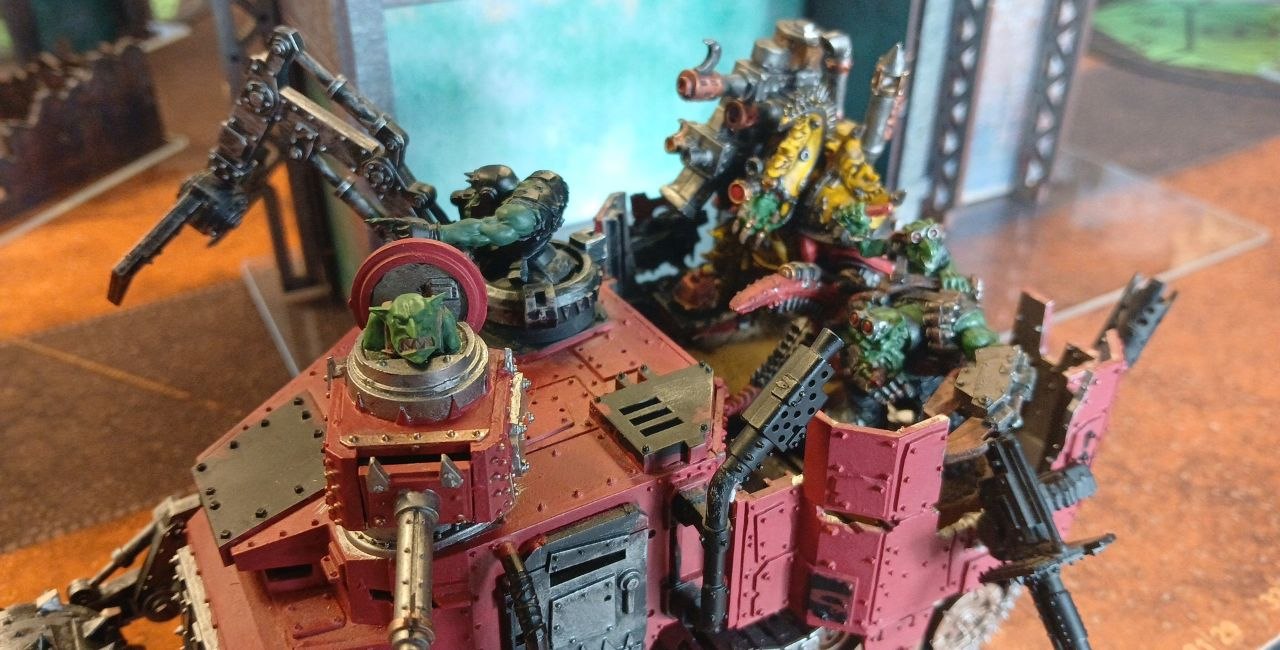

This blog is going to be fairly focused on a few key tabletop games that I enjoy playing. One of the most prominent ones include Warhammer 40k, so it would only make sense that I define (in my own words) what Warhammer 40k is. I don’t expect this blog post to be insanely comprehensive as it is a tall order to quickly summarize an IP and lore universe that has been culminating for, at the time of this writing, at least 50 years. Yet if you’ve never played a war game, a lot of what I write about may not make a ton of sense.
“so if I’m within six inches I get lethal hits and rerolls against my oath? Okay I’ll uppy downy and then give that some thought” see what I mean?
To start, I’m going to break this blog post up into the following categories. Click on whichever one interests you most, scroll around, or close the tab if you’re done here. Your adventure, so choose your path and roll the dice.
The Lore
Welcome to the 42nd Millennium.
Where there is only war.
Warhammer 40k is a futuristic sci-fi setting, taking place long long after the time of this writing. It’s also quite a bit dystopian, it’s primary story themes that recur across many storylines in this setting revolve around faith, perserverance, and the fact that the entire galaxy (if not universe) is plunged into what could be considered a never ending conflict. Story lines converge, and some generally pretty ethically grey heros (or just downright evil wicked dudes) drive a narrative generally stating there is still a small glimmer of hope, even in circumstances as dire as multiple races across an expanse of space (such as eldar and chaos gods and humanity) are all fighting for the same right to exist.

Next, a word from our sponsor*
*disclaimer: they’re not actually a sponsor of this blog
Games Workshop
This is the company currently responsible for the IP that is Warhammer 40k. Who better to set the stage for a now prosperous and media culture rich phenomena such as Warhammer 40k than those sworn to maintain the sanctity of the setting?
“Hey Games Workshop what is Warhammer 40k?”

As previously mentioned, Warhammer 40k takes place in a futuristic hellscape that is grim dark, war is about the only science still making any meaningful progress, and every faction found in the setting has it’s own quirks, charms, and interests that appeal to a wide audience who want to get lost in a setting as vast as this space fantasy opera can be. Given this, there is a vast array of different ways to get involved and engaged with the setting. The next couple of sections will try to break them down succinctly (but hopefully not too succinctly, as my intent to inform is just as strong as my intent to recruit! I hope this blog post informs your approach to the hobby).
The Media
Okay, let’s address the futuristic elephant in the room
This game is a little weird. It’s sci-fi, it’s dystopian, it’s been a bit of a niche special interest up until just recently as the game started seeing record profits (and presumably an increase in player base as a result). There are a ton of different authors writing books to define the “canon” narrative for the series, but the community is also large and fervent.
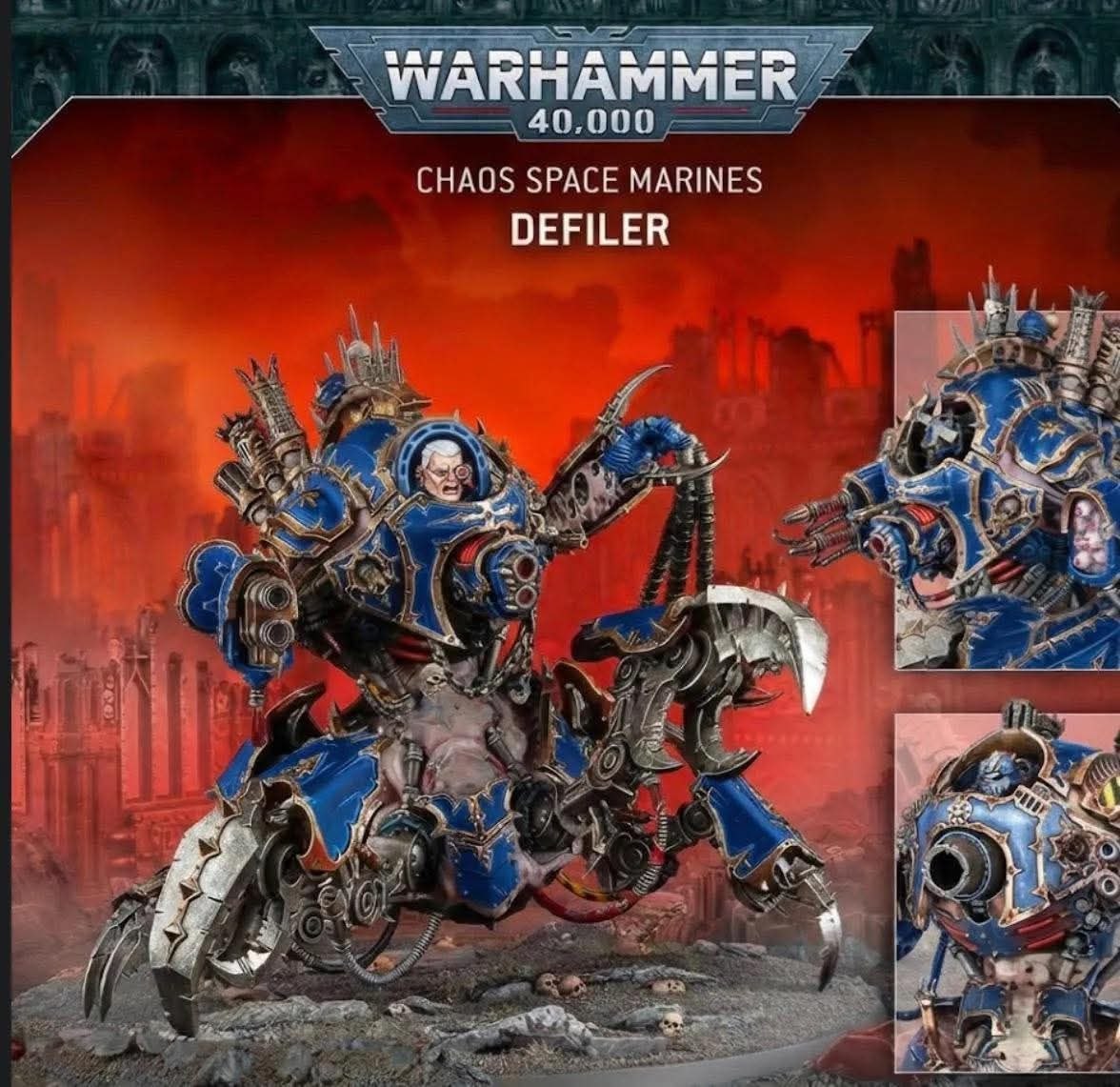
Grimdark vs. Grimdork
If you’re into Warhammer 40k for the setting, you’re also likely into it for the memes. The online community that has gathered around the IP also is responsible for generating a large amount of fan content related to the setting, much to the chagrin of Games Workshop’s IP lawyers. As a result of this, it is very possible to catch snippets of a very specific plot line or something strange that happened way back in the series that was “very dark and edgy” and now maybe not as culturally appropriate. This attempt on behalf of the content creators to make content in the setting as edgy as possible has resulted in two very distinct interpretations of Warhammer 40k: serious war, and beer and pretzels comedy hour.
The latter is formed when a specific author goes so far as write out a very detailed description of how corrupted biologically engineered space soldiers are cloned. It’s a set of circumstances so ridiculously grim that it inverts the spectrum, and wraps back around to being goofy and something to be mocked for entertainment. The former, the serious war bit, enables a balance in the narrative between the ridiculousness of how cruel a setting can be to any specific person (or group of people), and the sheer essence of feeling the reassurance from your fellow comrade that through thick and thin, your squad has your back (although some factions have a questionable definition of loyalty). This post modern setting encourages a wide variety of narratives involving morality, strategy, war, self reflection, faith, intrigue, and much, much more.
The Game
If I spent this entire blog post talking about the lore and the setting, I’d be here all day. Did I mention this game has been around since the ’80s?
I hope I’ve successfully transferred The Vibes of Warhammer 40k to your brain, but if not, do not worry. A simple google search will take you head first into anything you want to know about the lore, as it is heavily chronicled across many formats of media. Now, let’s discuss the part I’m interested in (self-interest is divine).
Rolling Dice, the Net Zero Game
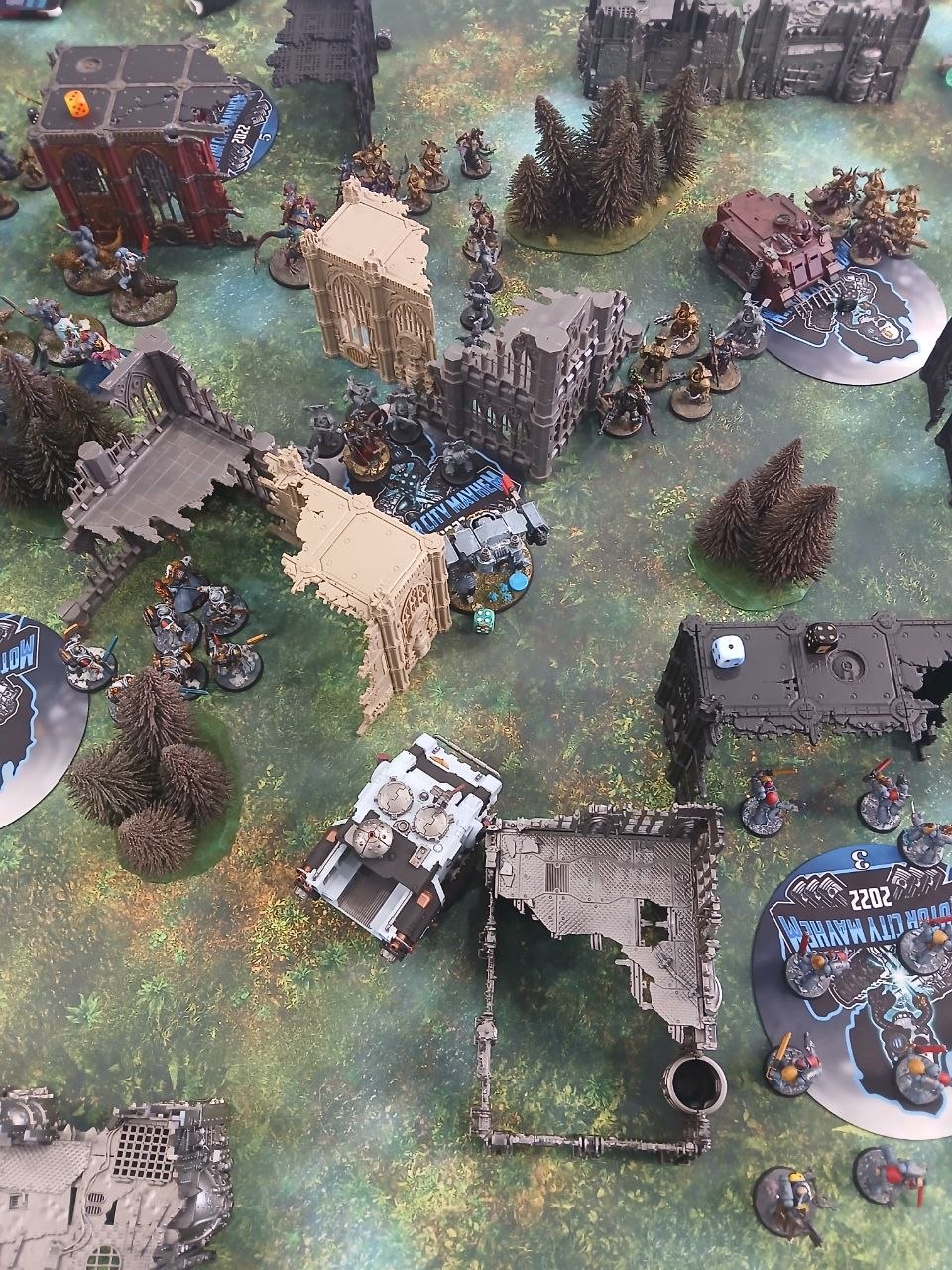
Warhammer 40k is a turn based tabletop game played with miniature buildings and bits of foam to act as terrain, and 28mm scale miniatures sold by Games Workshop to play the game. You also need dice, measuring tape/stick, and a laser pointer couldn’t hurt either. Over the course of (usually) three hours, you and one other person take turns moving models in formation, activating in strategic ways, and accomplishing objectives as they are drawn from a deck throughout the 5 rounds of the game. By the end, either one person has more points than the other, or someone (or both, or neither) has accomplished the objective determined before the game began.
Open play, narrative play, competitive play
Given that a good majority of the game is decided by rolling six sided dice and trying to anticipate what kind of trouble you might be in for (and thus staging units in advance to deal with that), you’d think the outcome of each game becomes effectively a coin flip. Compound this with the fact that there are over 25 playable factions in the game, each with their own sub-faction like rules (called detachments at the time of writing) to further customize how they interact with the game, you might be wondering how does one “get good” at Warhammer 40k?
Given the wonderful information highway known as the internet, it is possible for players all around the world to communicate which tactics work the best. In fact, entire websites dedicated just to analyzing the results of how certain factions perform display these stats as public knowledge and are regularly updated. So by being constantly informed, it is possible to “get good” if desired.
Do you have to though?
Certainly not. Competitive Warhammer 40k, while a prominent part of the hobby, is but one modality in which to enjoy the game. A lot of competitive warhammer players start out playing a mode called “open play”, which is what it says on the tin. You and your opponent decide the terms, play a couple rounds of a mission, and determine the winner via the outcome of how your units that game performed.
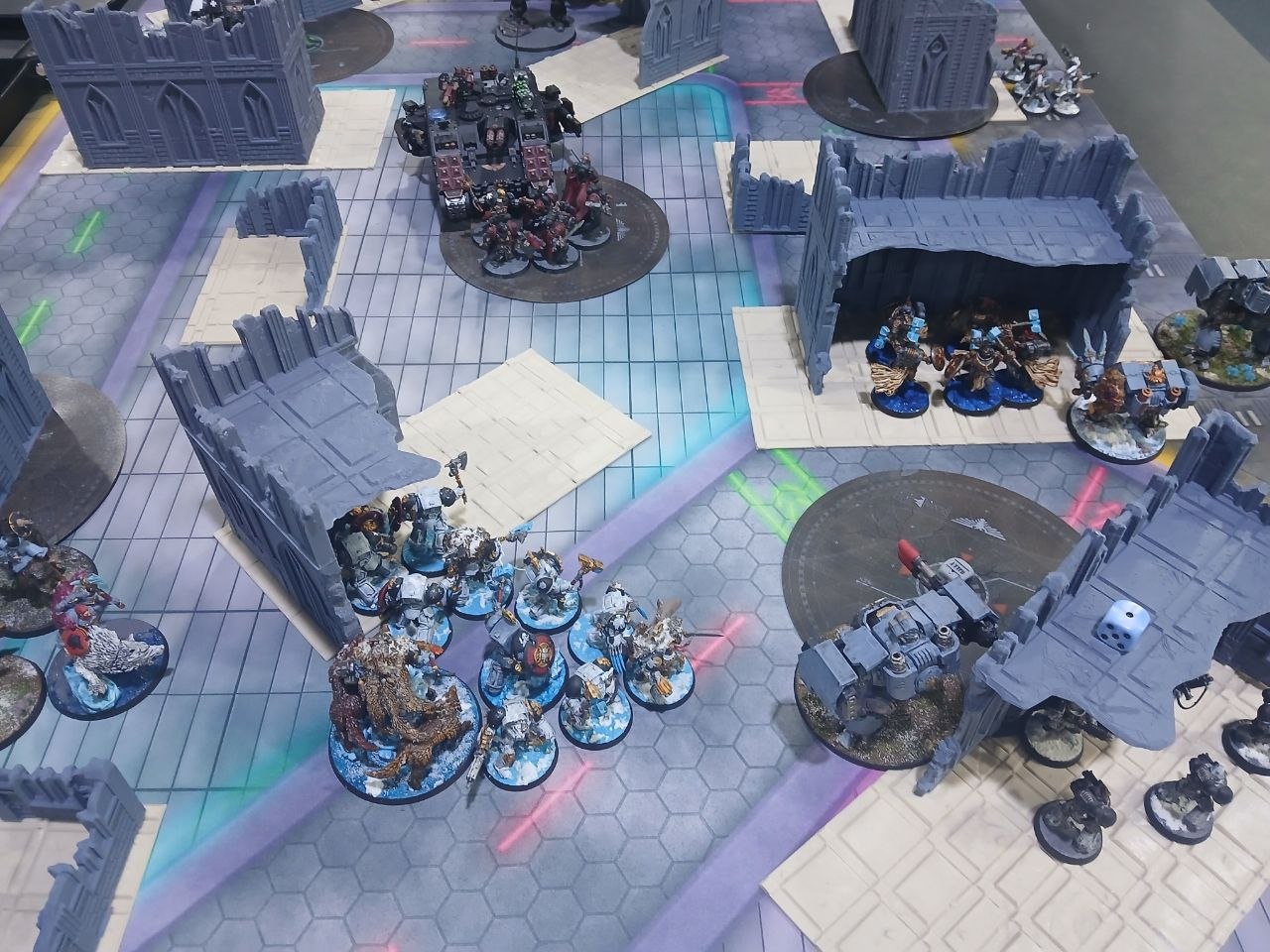
Narrative Warhammer 40k takes this concept and amps it up to an 11, giving players tools to further customize the rules of their units to enable a sense of progression as the story of their forces unfold. Not only do your units develop over time, but fun rivalries can also start between your faction and that of the other players in the narrative group you’re in. Then comes the next very crucial part that makes up the Warhammer 40k experience.
The Community
Your Group
I mentioned earlier that Warhammer 40k has a very strong following online, and it’s not hard to find your posse among like minded individuals enjoying the same content as you. However if you’re going to buckle down and stomach some of the prices Games Workshop would like you to pay for their New In Box Multi-Part Adult Model Sets, it goes without saying the game becomes a lot more interesting if you get into it with friends.
To enjoy the tabletop game proper, having a “partner in crime” is paramount. Hell, go flip every house over in the caldasac and find just about every basement dwelling nerd who likes dice as much as you do and invite them to play. War is misery, and misery loves company. To help you recruit some strapping future opponents, follow the guidelines below:
- Pick Your Enemies, Keep Em Close
- Warhammer can be a bit of a long game. Make sure who you’re planning on spending 3 hours playing toy soldiers with is someone you like being around.
- Pick Your Faction
- If you’re getting into it for the first time, don’t feel like you gotta throw major bank. See if a friend has some models to borrow, check Facebook Marketplace, or support your local game store. Combat Patrols are perfectly okay to start.
- Pick Your Rules (or just google em)
- How do you win? How do you lose? What are the stakes? Loser buys winner lunch!
- Realize you like this game, and want to play it more
- This is normal.
The Friendly Local Game Store (FLGS)
If you can think of a store near you that sells Magic the Gathering cards, Dungeons and Dragons supplies, and a hearty supply of paints and other hobbying supplies then chances are good they sell Warhammer 40k kits. You’ll know for sure when you see games being played in the store, as that’s also usually a strong indicator.
This is “your local scene”. The watering hole. The community within driving distance willing to enthuse about their increasingly intricately painted army guys in broad daylight. Cherish them – while enemies in combat, it is a nonzero chance they become great friends through the magic of Warhammer 40k. Try your best not to be a “That Guy” to anyone here, it’s generally considered a Party Foul by all those involved. When events are organized, this is the place where you scamper to get the first ticket. If you’re playing in store, you’re buying snacks and maybe a few kits while you’re there. At the risk of sounding like a territorial dog – this is “your place” and just as it respects you, you respect it.
Conventions, Teams, Rankings
While not a necessary part of the hobby, it is one I partake in personally. When you want to play Warhammer 40k competitively, eventually you will find yourself in places you’ve never been just to play this game. Large banquet halls reserved just for 50 or more games to be played simultaneously, breweries repurposed into event spaces for special themed events, and even thousands of dollars in prize money distributed to those who make it to the top tables.
I will likely never find myself #1st in faction for any period of time, but I do look up to those who have worked to hone their craft (both in sense of painting their forces and also playing the game) and worked until they reached the top. Going to these events are also an incredible experience to have with a group of friends, which is why I cannot emphasize enough the effect of getting a “crew” together can have on enjoying the game.
So to wrap it all up, what is Warhammer 40k?
Well in my opinion, its a fun war game that can take you new places (both figuratively and literally), help you meet new people, and make lasting memories. For me, that’s all it needs to be, but it could be that, or it could something more, new and/or interesting for you!